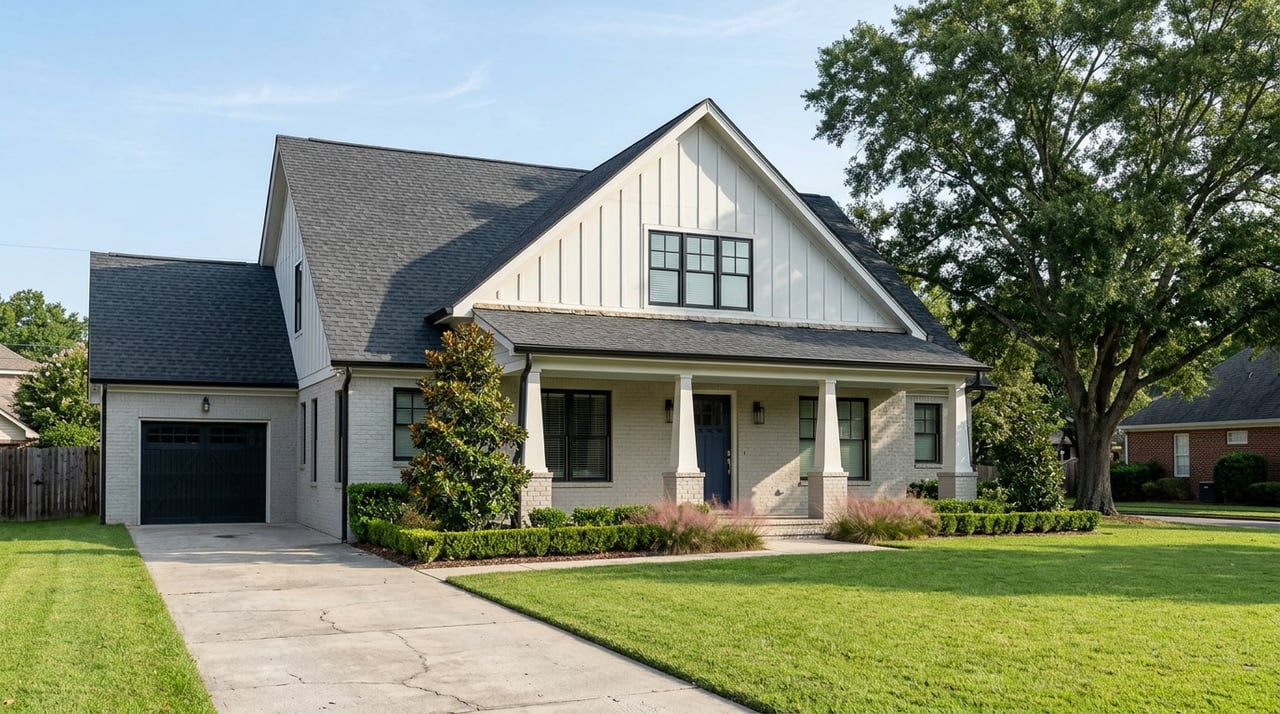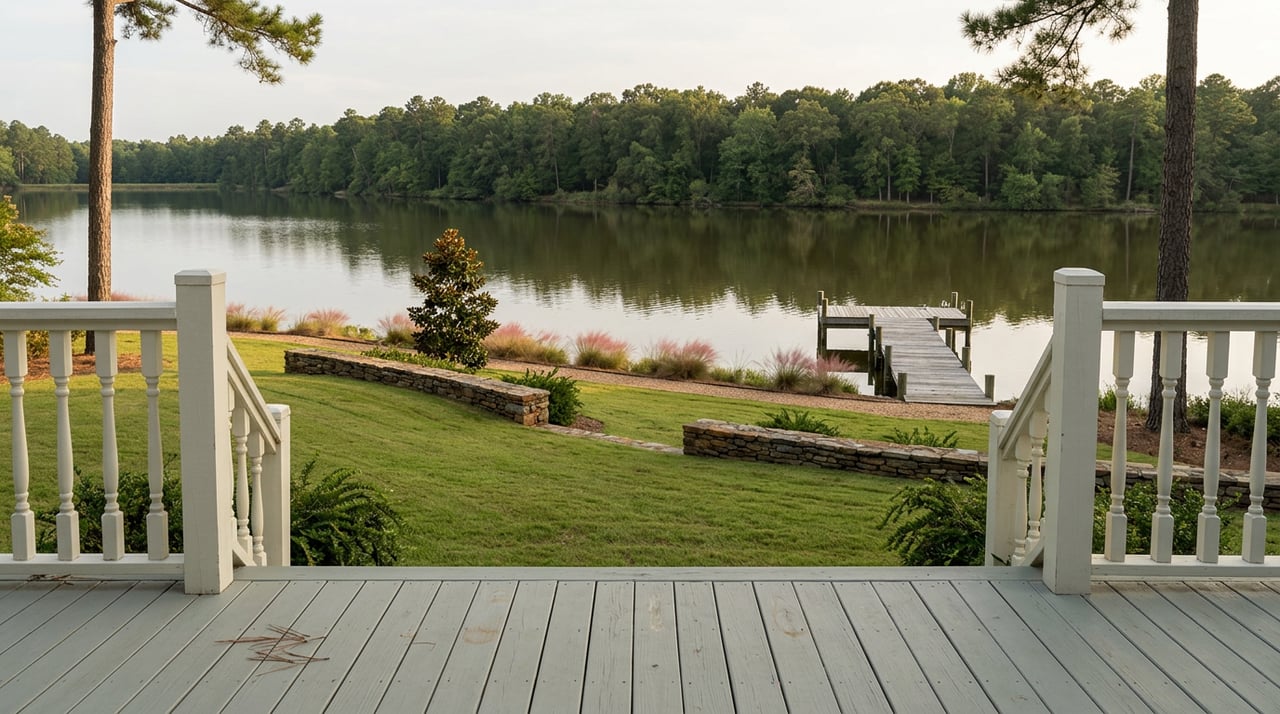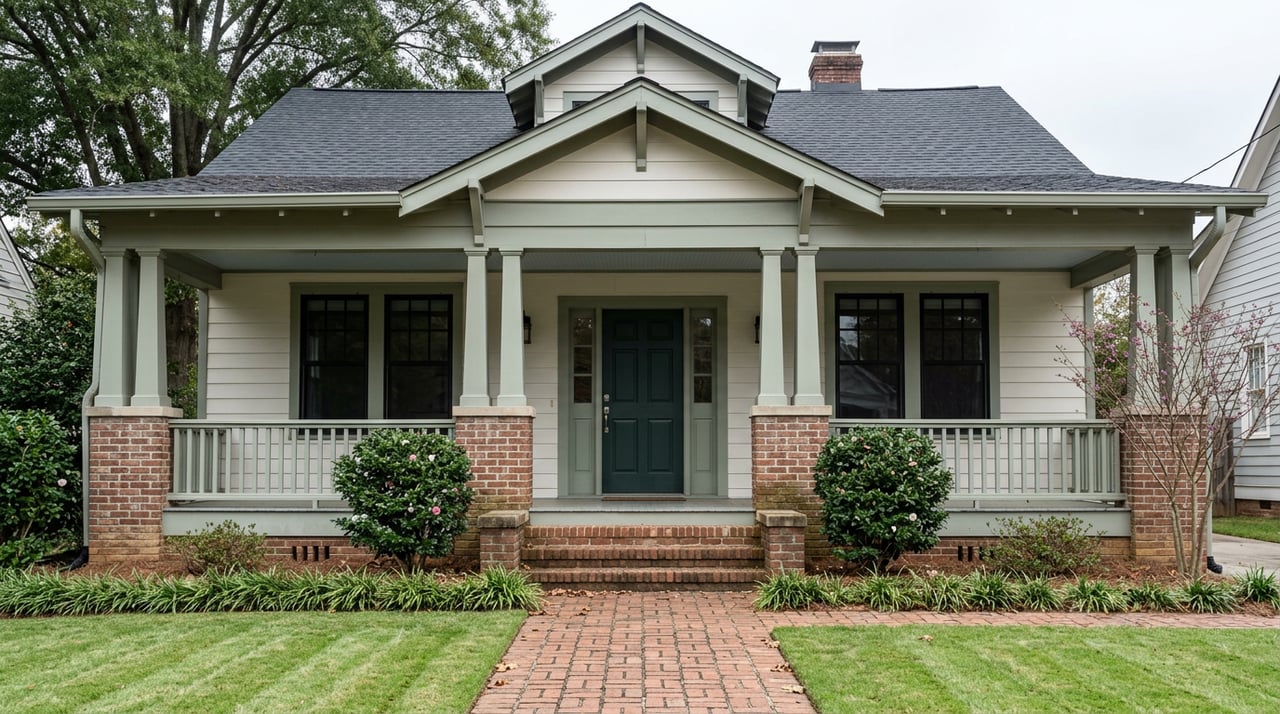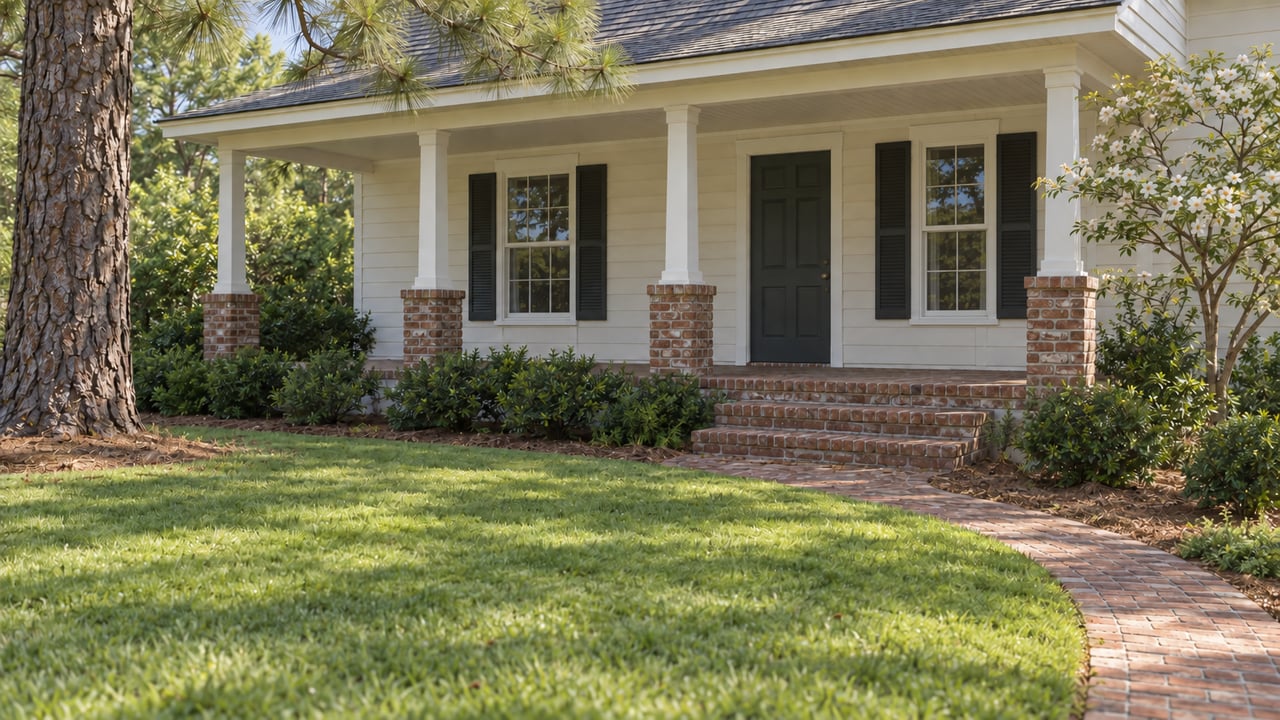
What happens when a seller near downtown Southern Pines checks a portal, sees the town's median price climbing, and prices their house to match?
Over the three months ending June 2026, the median sale price across Southern Pines was $558,000, up 3.4% from the same period a year earlier. Narrow that same search to Downtown Southern Pines and the median sale price over the three months ending May 2026 was $475,000, down 12.1% year over year. Price per square foot makes the split sharper. Townwide, the median sat at $230 per square foot, down 11.7% from a year earlier. Downtown alone, it was $193 per square foot, down 32.5%. Homes townwide are also sitting longer, with average days on market rising from 17 to 52 over the same year-over-year window, even as the number of homes sold in June ticked up to 115 from 97.
A seller pricing off the townwide headline number is pricing off a market their house doesn't actually compete in. The gap isn't noise. It traces back to roughly 4,000 acres that can never be built on, and to a private trail network that makes restricting your own land more valuable, not less.
The Acreage That Sits Outside the Market
The Walthour-Moss Foundation occupies land one mile from downtown Southern Pines, established after the death of William "Pappy" Moss to preserve open ground he and his wife Virginia Walthour Moss had spent decades assembling. The property carries a National Register of Historic Places designation and in 2021 the Foundation donated a conservation easement to the U.S. Forest Service under the Forest Legacy Program, one of the largest such easements in that program's history. The Nature Conservancy monitors the easement on the Forest Service's behalf. According to the Land Trust Alliance's profile of the Foundation, it owns 4,092 acres outright with another 29 under separate easement, and has operated in Moore County since joining the Alliance in 2011.
None of that acreage will ever become a subdivision. That single fact does more to explain Southern Pines' pricing split than any renovation trend or interest rate move. A buyer who wants proximity to that land isn't shopping in a market with elastic supply. They're bidding on the fixed edge of a preserve that grows smaller only by donation, never larger by construction.
Why a Restriction Can Raise a Price
The counterintuitive part is what happens on the properties that border the Foundation. According to the Equine Land Conservation Resource, roughly 80 neighboring landowners have each deeded a linear right-of-way easement to the Foundation along their own back fence line or farm path, stitching together a private trail network that lets riders hack from their own barns straight onto Foundation land. Those easements run permanently with the property. In exchange, owners get a tax benefit where applicable and a place in a network that, as the ELCR piece puts it, becomes more valuable specifically because everyone in the chain has agreed not to break it.
That's the opposite of how a restriction usually prices. Down zoning normally suppresses value by limiting what an owner can do with their own dirt. Here, giving up part of your development rights buys entry into an amenity nobody outside the chain can access at any price. One recent horse country listing near the Foundation illustrated the pattern directly: just over 47 acres pairing a mid-century ranch house with two six-stall barns, held under a land conservation agreement with Three Rivers Land Trust that blocks further subdivision while preserving the owner's access to the trail system and the associated tax treatment. The restriction is the selling point, not the drawback.
What the Horse Country Numbers Actually Look Like
The premium this produces is measurable, though the sample is thin enough that it swings hard from month to month. Specialty land listings this fall show 13 equestrian properties active near Southern Pines, averaging $2,045,000 with a per-acre cost around $74,708. That's the wide-lens horse country figure, the one built from full estates.
Run a narrower search for homes explicitly tagged as horse farms and the picture thins out fast: as of this fall, only two such listings were active, with a combined median of $565,000, a fraction of the wide-lens average. The gap between those two numbers isn't a contradiction so much as a reminder that horse country isn't one price tier. It's a handful of large estates near the Foundation's actual boundary trading at multi-million dollar prices, and a much smaller, cheaper set of properties that merely carry the horse farm label without the acreage or trail access to match. Searches for horse farm listings in Southern Pines also surface homes in Village West District, Mid South Club, Knollwood Village, Forest Creek, and Old Bethesda, neighborhoods that show up in the same result set without all of them bordering the preserve itself.
The demand side of this isn't abstract either. Southern Pines has hosted the Stoneybrook Steeplechase at Carolina Horse Park for decades, an event that keeps a working equestrian culture, and the buyers who follow it, anchored to this specific stretch of Moore County rather than to horse country in general.
What This Means If You're Reading One Median as the Whole Town
The practical takeaway for anyone comparing Southern Pines to another Moore County town isn't that the market is rising or falling. It's that the town median blends two markets with almost nothing in common. One is ordinary in-town housing, where inventory can still be built, days on market have tripled year over year, and price per square foot has fallen by nearly a third in the downtown core. The other is a fixed ring of acreage around permanently protected land, where supply cannot expand no matter how much demand shows up, and where a legal restriction on subdivision functions as the reason to buy rather than a reason to walk away.
If you're selling a home inside the downtown footprint, the townwide median is not your comp set. The properties actually competing with yours are the ones seeing longer marketing times and softer per-square-foot pricing, not the ones trading near the Foundation's edge. If you're buying with horse country access in mind, ask directly whether a listing borders Foundation land or the neighbor-easement trail network, or whether it simply carries a horse farm label without either. Those two properties can sit ten minutes apart and price a million dollars apart for reasons that have nothing to do with the house itself.
A median price answers the question of what a typical Southern Pines home sold for. It doesn't tell you which Southern Pines you're actually buying into. The Foundation's boundary line does that instead, and it's a line no zoning map will show you.
If you're trying to work out which side of that line your search actually belongs on, BHGRE Lifestyle Property Partners can walk the comps with you before you price a listing or make an offer.