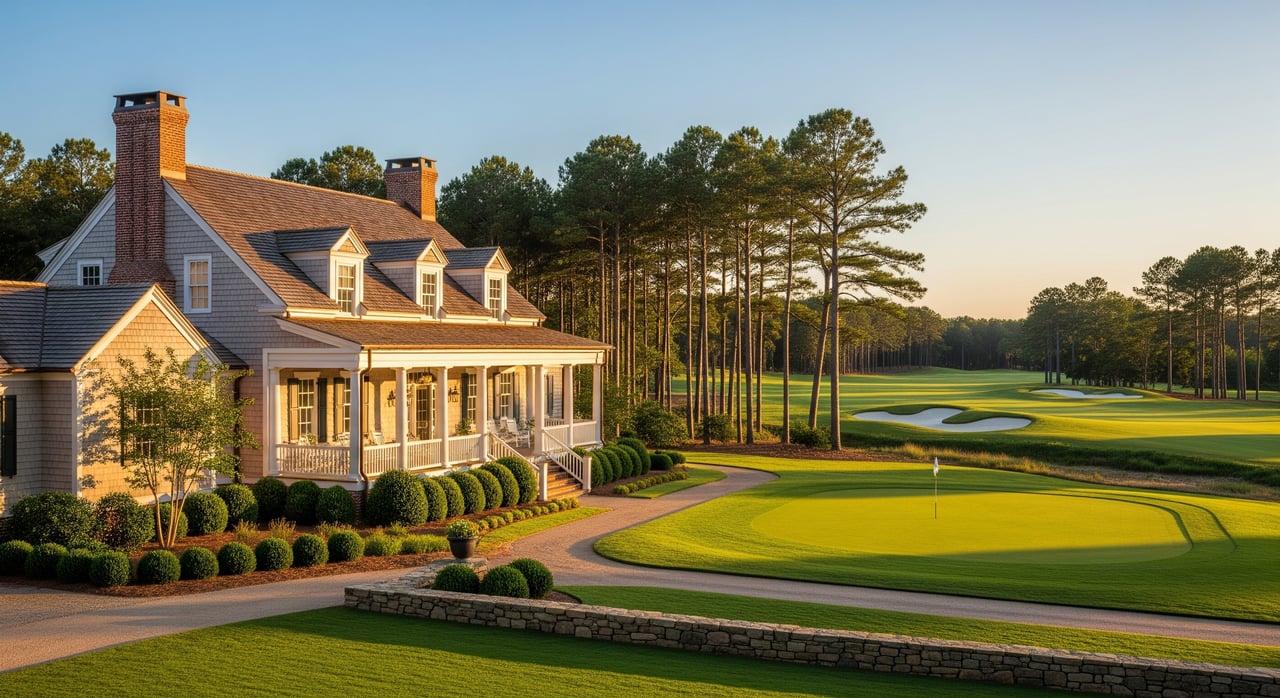
Thinking about buying in a Pinehurst golf community but unsure how HOA rules and club memberships actually work? You are not alone. The details can feel complex if you are relocating or shopping remotely. In this guide, you will learn how HOAs and Architectural Review Boards operate, what typical rules look like in Pinehurst, how club access fits in, and what to review before you make an offer. Let’s dive in.
HOA vs. club: who does what
In most Pinehurst golf neighborhoods, the HOA handles community rules and maintenance while the private club manages golf and member benefits. Your HOA governs use restrictions through the CC&Rs and enforces appearance standards through an Architectural Review Board, often called an ARB or Design Review Committee. The HOA also collects assessments for roads, landscaping, pools, and other common areas.
The club is a separate legal entity. Club membership, tee time policies, and dining or social privileges are controlled by the club’s bylaws and membership agreement, not the HOA. This means your HOA dues typically do not include golf access. Always distinguish between mandatory HOA obligations and any optional club membership.
Key documents you will receive
You will see several documents during a purchase. The most important are:
- CC&Rs, the governing rules for property use, exterior changes, parking, pets, rentals, assessments, and ARB authority.
- Bylaws, which outline board structure and meeting procedures.
- Articles of Incorporation for the HOA’s corporate status.
- Rules and Regulations, which add operating detail under the CC&Rs.
- ARB or architectural guidelines, which spell out materials, colors, submittal requirements, and design standards.
- A resale or transfer disclosure package, which typically includes financials, budgets, meeting minutes, current assessments, and any pending special assessments.
North Carolina law provides the framework for HOA governance, disclosures, and lien rights. Local permitting through the Village of Pinehurst and Moore County runs alongside ARB approvals, especially for building permits, tree removal, and stormwater controls.
Common exterior and ARB rules
Golf and resort communities in Pinehurst use ARBs to keep a cohesive look, protect course views and buffers, and manage drainage and sightlines. While every neighborhood’s rules are specific, you will often encounter the following categories.
Materials and colors
Expect approved color palettes, roofing materials, and trim details. Bright or unusual colors often require ARB approval. Some communities specify siding, brick, or stone combinations for consistency.
Building size and setbacks
Communities may limit height or massing and set setbacks from golf holes. Second-story additions near fairways can be restricted to avoid blocking views.
Fences, parking, and garages
Front-yard fences are often limited in height or style. Garages may be required to be side-load or screened to maintain streetscapes. On-street parking rules and restrictions on boats or trailers are common.
Landscaping and irrigation
You may find requirements for native or drought-tolerant plants, standards for irrigation systems, and rules for yard upkeep. Tree removal can require both ARB approval and local permits.
Outdoor structures and hardscape
Patios, decks, pergolas, pools, and pool fencing typically need ARB approval, especially if visible from the course. Placement and materials are often regulated.
Solar, satellite, and antennas
ARB guidelines usually address location and screening. State law may limit the ability to ban solar outright, but reasonable placement standards are common. Verify current statutes and the specific neighborhood rules.
Lighting and signage
Communities often prioritize neighbor-friendly lighting with dark-sky goals. There are usually rules limiting political or commercial signs and guidelines for real estate signage.
Temporary structures and construction
You will find rules for dumpster placement, work hours, erosion control, and neighbor notifications during projects.
Pinehurst nuances to expect
- Golf course buffers can carry extra rules for homeowners on the fairway. Plantings that interfere with play or course maintenance are often restricted.
- Historic and “Village” areas may use more prescriptive architectural guidance to preserve character.
- Work near cart paths or course infrastructure may require coordination with the club or resort.
The ARB review process
ARB approvals are usually required for new construction, additions, exterior changes, and many landscaping projects. Plan for a structured submittal and review.
What to submit
A complete package often includes a site plan, scaled elevations, material and color samples, a landscape plan, contractor insurance, and a timeline. Some ARBs require neighbor notifications or signatures.
Timelines and fees
Many associations set review windows, commonly 30 to 45 days. Urgent repairs may have expedited paths. Expect submission and plan review fees. Some ARBs require refundable construction deposits to cover potential damage to common areas.
Variances and appeals
If your plan does not meet a standard, you can usually request a variance. CC&Rs typically outline internal appeal procedures and reference legal options under state law.
Amenities and membership basics
Many Pinehurst neighborhoods maintain attractive HOA amenities. Golf-related benefits usually live with the private club.
HOA amenities
You may see neighborhood pools, tennis or pickleball courts, playgrounds, greenspaces, and private road maintenance. HOA fees fund these items and the community’s routine operations.
Club amenities
Golf courses, practice facilities, clubhouses, dining, social events, instruction, and reciprocal play are typically part of a separate club membership with initiation fees and monthly or annual dues. Policies can include minimum spends and guest fees.
Access and tee times
Confirm whether any HOA conveys club privileges. If membership is optional, ask about initiation costs, waitlists, and priority systems for tee times by membership level.
On-course living
If your home abuts a fairway, expect occasional errant shots, early morning maintenance, irrigation schedules, and pesticide applications per the course calendar. Follow club guidelines on walking near the course and respect quiet hours and pet rules.
Enforcement, fees, and resale
Understanding how rules are enforced and how fees work will help you buy with confidence.
How enforcement works
Associations typically use violation notices, fines, and suspension of common-area privileges. Unpaid assessments can become HOA liens. CC&Rs should state the notice, cure periods, and appeal process.
Assessments and reserves
Regular assessments fund operations such as landscaping, roads, pools, trash, and security. Special assessments can address major projects. Healthy associations often maintain a reserve study to plan long-term replacements and repairs. Ask whether a recent reserve study exists.
Disclosures that matter
Your resale package should include CC&Rs, bylaws, rules, financials, budgets, meeting minutes, and any pending litigation or assessments. Review violation history for the property and the community to understand enforcement trends.
Rentals and occupancy
Many golf communities regulate or prohibit short-term rentals, such as stays under 30 days. Some limit the total number of rentals or set minimum lease terms. Owner-occupancy requirements can also apply. Verify neighborhood specifics.
Financing and insurance impacts
Lenders and insurers may review HOA financial health, litigation status, and special assessment exposure. Confirm that the HOA will issue a current statement of account and any estoppel or transfer documentation needed for closing.
Buyer due diligence checklist
Use this checklist to organize your review before you make an offer.
- Request the full HOA resale or transfer package and, if relevant, the club membership agreement.
- Read CC&Rs, bylaws, rules, ARB guidelines, and the most recent 12 months of meeting minutes.
- Review the budget, financial statements, any reserve study, and insurance certificates for common areas.
- Ask about planned or pending special assessments and major capital projects.
- Confirm the ARB review timeline, fee schedule, and required deposits for your intended projects.
- Clarify rental policies, including short-term rules and any caps or registration requirements.
- Verify rules for solar panels, satellite dishes, EV chargers, and golf cart storage.
- For homes on the course, confirm buffer easements, yard maintenance responsibilities, and any course coordination for exterior work.
- Understand dispute resolution and appeal procedures with the HOA and ARB.
- At the club, confirm membership types, initiation fees, dues, spending minimums, waitlists, and tee time priorities.
- Visit the neighborhood to observe common-area condition, course buffers, and overall upkeep. Talk with neighbors about culture and enforcement.
When to bring in experts
If CC&Rs are unusual or there is pending litigation, consider consulting a local real estate attorney familiar with North Carolina HOA law. For additions or remodels, speak with the ARB early and engage an architect experienced with local guidelines. If you have drainage or course-adjacent concerns, consult the town or county and the club superintendent.
Final thoughts and next steps
Every Pinehurst golf community has its own rules and rhythm. The best move is to review the resale package, read the CC&Rs and ARB guidelines closely, and verify how club membership works for that specific neighborhood. With a clear plan, you can match your lifestyle goals with the right mix of HOA amenities and club access.
If you want local guidance and a curated shortlist of Pinehurst neighborhoods that fit your plans, connect with BHGRE Lifestyle Property Partners. Our team brings deep community knowledge and a lifestyle-first approach so you can Find Your Lifestyle.
FAQs
What is the difference between the HOA and the club in Pinehurst?
- The HOA governs property use, design standards, and common-area maintenance, while the club runs golf and member benefits under separate membership agreements.
Are golf privileges included in HOA dues?
- Typically no. Golf, dining, and clubhouse access are usually part of a separate club membership with its own fees and policies.
How long does ARB approval usually take?
- Many ARBs set review windows around 30 to 45 days, with expedited paths for urgent repairs. Timelines vary by neighborhood and project scope.
What exterior changes need ARB approval?
- New builds, additions, major landscaping, exterior color changes, hardscapes, fencing, and visible structures near the course commonly require prior approval.
Can an HOA in Pinehurst ban solar panels?
- State law may limit outright bans, but HOAs often set reasonable placement and screening standards. Always verify rules for the specific neighborhood.
Are short-term rentals allowed in Pinehurst golf communities?
- Many communities restrict short-term rentals, often defined as under 30 days, or require registration and minimum lease terms. Check the CC&Rs.
Who maintains the area next to a fairway?
- Responsibilities can vary. Some properties have buffer easements with specific owner maintenance duties and rules coordinated with the course.
What should I review before making an offer?
- Examine the resale package, CC&Rs, ARB guidelines, financials, reserve study status, meeting minutes, rental policies, and any planned assessments.